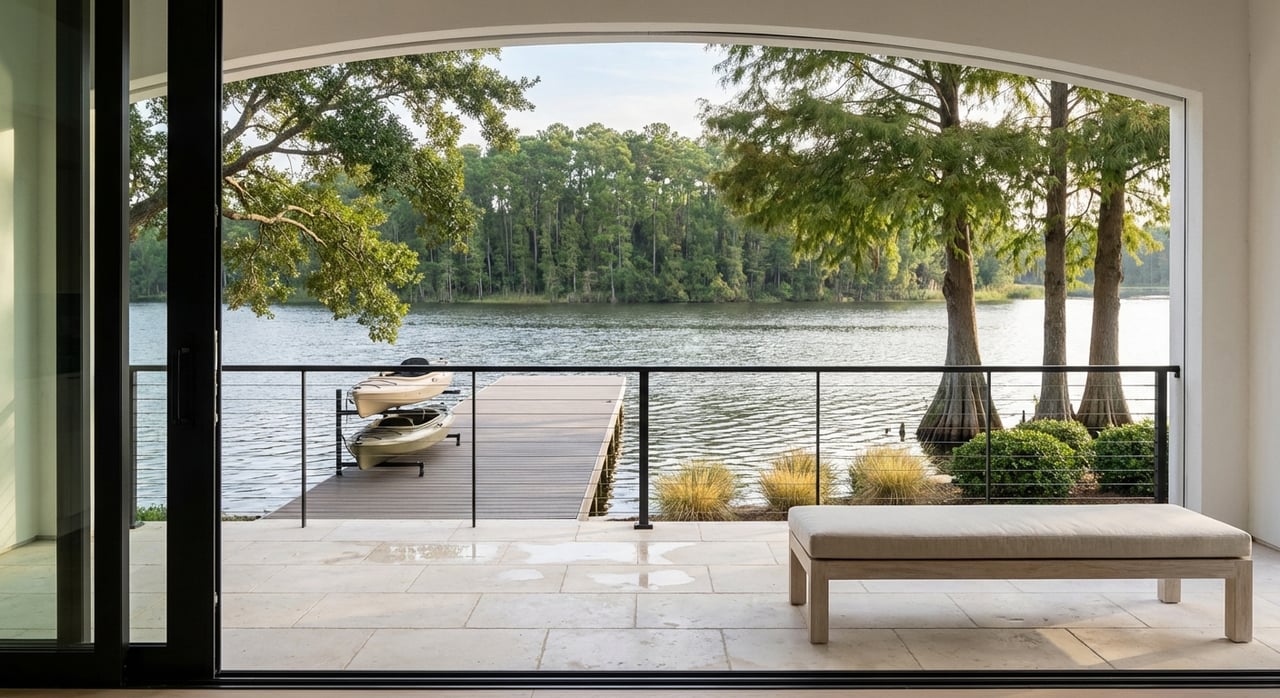
Lake Conroe Living Overview for Smart Homebuyers
February 19, 2026
February 19, 2026
Picture your morning coffee on a quiet dock, sunlight on the water, and weekends spent cruising to a lakeside lunch. If Lake Conroe has been calling your name, you’re not alone. Buying near the lake is exciting, but the details matter more than most waterfront buyers expect. In this guide, you’ll learn what to check first, how permits and utilities work, where the hidden costs are, and how to shop smart in Conroe and Montgomery. Let’s dive in.
Lake Conroe is a major recreational reservoir about 35 to 45 miles north of downtown Houston. It was impounded in 1973 and is managed by the San Jacinto River Authority. Surface area estimates vary by source, with Texas Parks and Wildlife listing about 20,118 acres and SJRA summarizing about 19,640 acres. Both note the lake’s role as a regional water supply and a popular recreation spot. You can review lake characteristics and fish species on the Texas Parks and Wildlife Lake Conroe page.
You’ll find a strong mix of boating, fishing, paddle-sports, and lively weekends at lakeside restaurants. Anglers target largemouth and striped bass, catfish, and panfish. Summer brings peak activity and a social vibe on and around the water. During busy seasons, plan for more boat traffic, popular lunch docks, and occasional evening live music.
Public and private ramps, plus marinas with slips and services, ring the lake. If you plan to own a boat, confirm where you will launch or store it before you buy. Some neighborhoods offer private launches or club marinas, while others rely on nearby public ramps. A private dock is not automatic with a waterfront lot, so verify rights, water depth, and permits early.
Docks, bulkheads, dredging, and most shoreline structures require SJRA permission, and those rights are not automatic with the land. Ask the seller for any existing licenses and permits, then confirm them directly with the authority. Start at the SJRA’s Licensing and Permitting page to understand approvals, revocation terms, and residential requirements. SJRA also publishes fees for lake-related structures in its rate schedule.
If a home is within 2,075 feet of Lake Conroe, SJRA enforces rules for on-site sewage facilities. New or modified septic systems need engineered designs, permits, and maintenance contracts. This affects both due diligence and long-term costs. Review the process and documentation on SJRA’s OSSF guidance page, and verify the property’s current setup, inspection tags, and maintenance records.
Around Lake Conroe, you’ll find everything from resort-style, gated communities with private marinas and country-club amenities to more rural shoreline lots. Membership rules, fees, and access to amenities vary. In amenity-heavy neighborhoods, confirm whether club membership is required to use certain facilities and whether marina slips have waitlists or transfer fees. Always request CC&Rs, budgets, recent meeting minutes, and current policies during your option period.
Many newer areas are served by Municipal Utility Districts that levy their own taxes and utility rates. Some developments may also have Public Improvement District assessments. Ask which district serves the property and review tax rates, bond debt, typical monthly bills, and whether your lender will escrow these costs. If the property is on septic, budget for inspections and maintenance and follow SJRA rules where applicable.
Texas boating law requires USCG-approved life jackets on board. Children under 13 must wear a wearable life jacket while a boat is underway on most recreational motorboats, and PWC operators and passengers have added rules. Expect enforcement of boater education, cut-off switches, and safe operation by Game Wardens and TPWD. You can review key requirements on Texas Parks and Wildlife’s boating rules page.
Lake Conroe is busiest in summer and on holiday weekends. Expect more boat wakes, longer wait times at ramps, and crowded restaurant docks. If you prefer quieter days, you’ll love midweek mornings or shoulder seasons. If you enjoy the social scene, plan for festive summer weekends and event days around the lake.
Waterfront and near-lake properties require precise, lot-by-lot flood checks. Use the FEMA Map Service Center to view the current Flood Insurance Rate Map for the address. If the home lies in a high-risk zone, lenders will require flood insurance and you should ask for an elevation certificate. Start with the FEMA Map Service Center and obtain a property-specific quote early. Texas averages range widely by risk and exposure, so rely on an address-level estimate rather than a state average. For an overview of how flood insurance works in Texas, you can review this state-focused guide.
Lakefront homes typically command a premium, but the size of that premium depends on direct water access, water depth at your lot, dock rights and usability, shoreline protection, lake-level stability, and nearby amenities like marinas and clubs. Academic research shows that water quality also affects waterfront prices, which aligns with what local buyers feel on the ground. For background on how environmental quality influences value, see this peer-reviewed meta-analysis.
Think about how you will use the property. A home with reliable water depth for your type of boat, documented dock rights, and convenient access to marinas often resells more easily to the next waterfront buyer. In contrast, limited access, shallow coves, or unclear permits can narrow your audience. Before you bid, compare truly similar comps that match water access, dock usability, neighborhood amenities, and recent market conditions.
Many buyers focus on price and mortgage, but lake living comes with added carrying costs. Build a full-monthly and annual picture before you write an offer.
Use this quick list as you tour and compare properties around Lake Conroe.
Conroe sits on the south and southeast edges of Lake Conroe, about 40 to 60 driving minutes from downtown Houston in normal traffic. The city has grown quickly and had an estimated population of about 114,600 as of July 1, 2024, according to U.S. Census QuickFacts. Regional water supply and policy decisions have influenced development pacing at times. For example, local reporting covers a long-running dispute between Conroe and SJRA over surface water rates and discussions that included a temporary development moratorium. You can see that coverage here. If you plan to build or subdivide, factor potential timing and approvals into your plan.
Lake living near Conroe blends outdoor fun with real practicalities like permits, utilities, and insurance. When you line up shoreline rights, confirm utilities, and account for true carrying costs, you can shop and negotiate with confidence. If you want a calm, high-touch path to the right lake home, let’s talk. Reach out to Rising R Dream Properties to start your Lake Conroe search with a trusted, broker-led advisor.
Stay up to date on the latest real estate trends.

Get assistance in determining current property value, crafting a competitive offer, writing and negotiating a contract, and much more. Contact me today.

DIANE RUIZ
13858 STATE HIGHWAY 30 COLLEGE STATION TX 77845